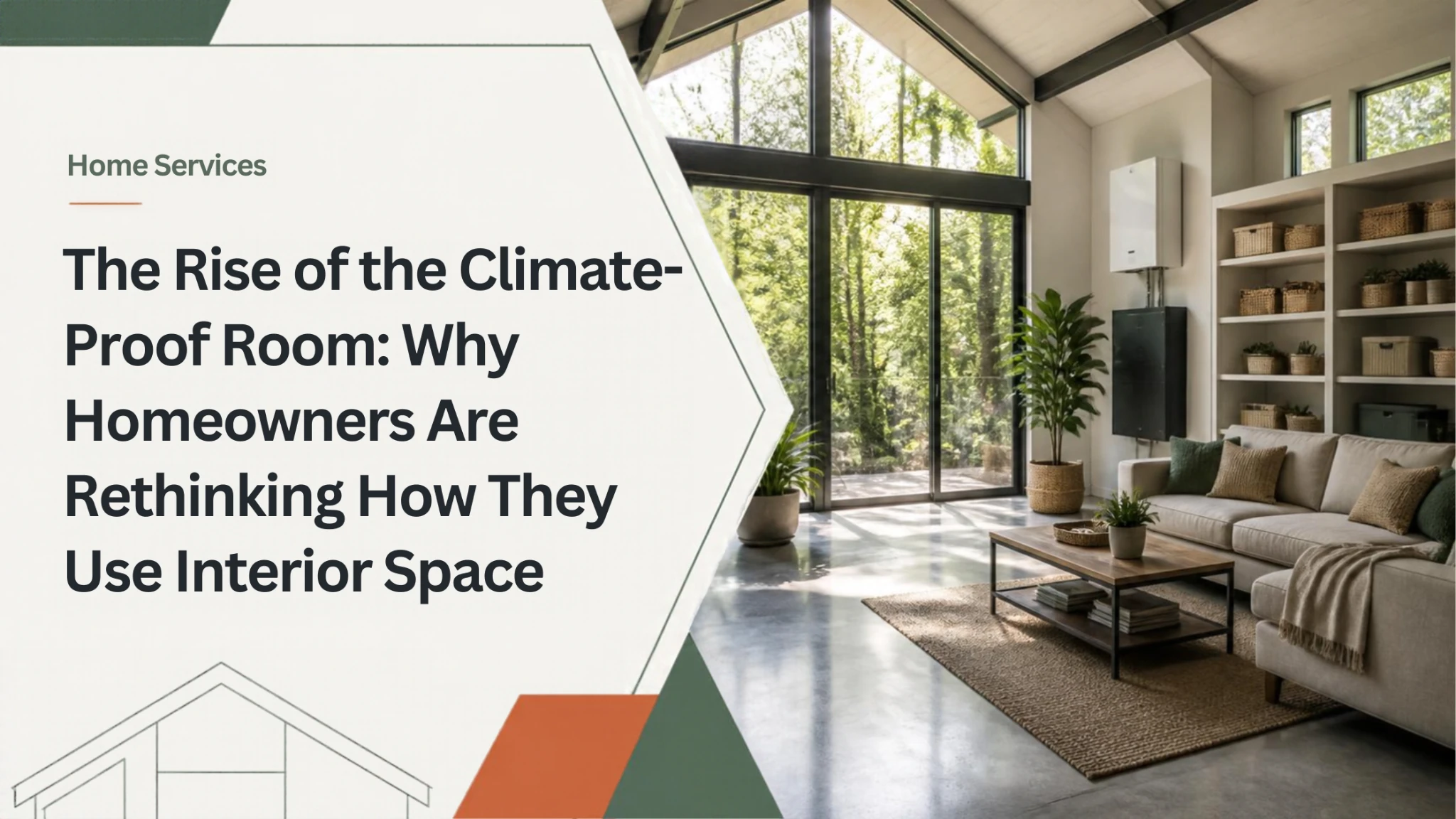
Extreme weather is changing how homeowners think about interior space. Rooms once designed mainly for comfort, appearance, or entertainment are being reconsidered for their ability to handle heat, humidity, storms, and unexpected power outages.
One emerging approach is the climate-proof room. This is an interior space designed or adapted to maintain more comfortable conditions when outdoor weather becomes difficult to manage. Rather than depending entirely on whole-house heating and cooling, homeowners can create a dedicated area with improved insulation, controlled ventilation, and efficient temperature management.
The concept reflects a broader shift in residential design. Homeowners are considering not only how rooms look and function during normal conditions, but also how well they perform when the weather changes.
What is a climate-proof room and why is it becoming popular in modern homes?
A climate-proof room is a designated interior space designed to reduce exposure to uncomfortable or potentially hazardous environmental conditions. Although the term is not a formal building classification, it describes a practical approach to improving indoor thermal comfort and resilience.
These rooms may include better insulation, energy-efficient windows, controlled airflow, and dedicated heating or cooling equipment. Depending on the home’s location, the design may also address humidity, indoor air quality, and emergency power needs.
The objective is not to make a room completely unaffected by weather. Instead, it is to provide a more manageable indoor environment during periods of extreme temperatures or other disruptions.
Common features include:
- Improved thermal insulation: Helps slow heat transfer through walls and ceilings.
- Efficient temperature control: Allows occupants to regulate heating or cooling within a specific area.
- Window shading and sealing: Reduces unwanted heat gain and air leakage.
- Humidity management: Helps control excess moisture and supports indoor comfort.
- Emergency preparedness: May include backup lighting, communication equipment, and appropriate power provisions.
Climate-proof rooms are receiving attention because indoor comfort is becoming more important during prolonged heat waves and unpredictable weather.
They also provide flexibility. A spare bedroom, home office, or family room can potentially serve as a more temperature-stable space without requiring a complete interior redesign.
How are extreme weather conditions changing residential interior design?
Residential interior design has traditionally focused on room function, appearance, natural lighting, and efficient use of available space. Climate-related concerns are adding another consideration: how effectively an interior environment responds to changing outdoor conditions.
During extreme heat, rooms with large windows, inadequate insulation, or substantial sun exposure can become uncomfortable. During severe storms, water intrusion, humidity, and power interruptions can affect how interior spaces are used.
These challenges are influencing several design decisions.
Greater attention to insulation and air sealing
Homeowners are examining how walls, ceilings, doors, and windows affect indoor temperatures. Proper insulation and air sealing can slow unwanted heat transfer and reduce the demand placed on heating and cooling equipment.
More thoughtful room placement
Interior rooms with limited direct sun exposure may be easier to keep cool than spaces surrounded by large, unshaded windows. However, room location alone does not guarantee comfortable temperatures.
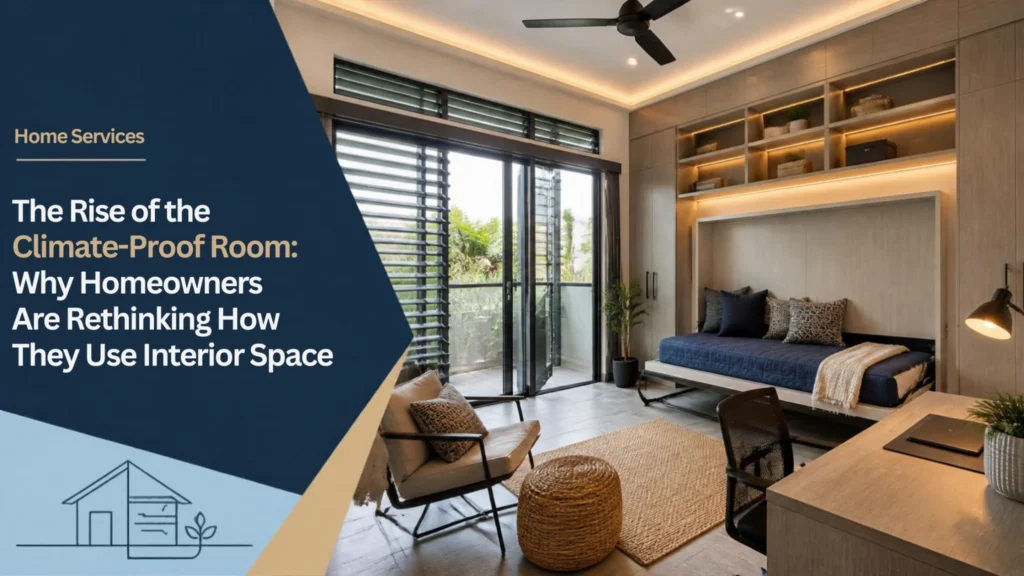
Increased use of moisture-resistant materials
In areas exposed to heavy rainfall or high humidity, moisture management is becoming an important consideration. Appropriate materials, ventilation, and water-intrusion prevention can reduce the likelihood of dampness and material deterioration.
Flexible room functions
Homeowners are also rethinking single-purpose layouts. A guest bedroom might function as a temporary cooling area, while a home office could provide a comfortable space for several household activities.
These changes encourage interior spaces that remain practical under a wider range of environmental conditions.
Can climate-resilient interior spaces reduce the effects of extreme heat and storms?
Climate-resilient interior spaces can help reduce certain indoor effects of extreme weather. Their effectiveness, however, depends on the building’s construction, local hazards, available utilities, and the specific improvements made.
During hot weather, insulation, shading, air sealing, and properly sized cooling equipment can help maintain more comfortable indoor temperatures.
For example, a room with insulated walls, shaded windows, and an efficient cooling system may experience less unwanted heat gain than a poorly insulated room exposed to direct sunlight.
The U.S. Environmental Protection Agency recommends measures such as window shading, insulation, and appropriate air conditioning to help manage indoor temperatures during extreme heat.
Storm resilience requires different considerations.
A climate-controlled room may offer improved everyday comfort, but it should not be confused with a certified storm safe room. Protection from tornadoes or hurricane-force winds requires specialized structural design that meets applicable safety standards.
Flooding creates additional limitations. A room cannot be considered safe during a flood simply because it has moisture-resistant finishes or sealed openings.
Power availability is another important factor. Air conditioning and mechanical ventilation generally require electricity. Without suitable backup power, a temperature-controlled room may gradually become dangerously hot during an extended outage.
For this reason, effective climate resilience involves several connected measures:
- Reducing heat entering the room.
- Maintaining suitable ventilation and indoor air quality.
- Protecting against moisture intrusion.
- Planning for power interruptions.
- Following local emergency and evacuation guidance.
A well-designed room can improve everyday comfort and provide useful flexibility during weather disruptions. It cannot eliminate environmental risks or replace emergency planning.
Why are homeowners prioritizing temperature-controlled spaces over traditional room layouts?
Temperature-controlled spaces offer a different approach to residential planning. Instead of treating every room as an area that must provide identical comfort throughout the day, homeowners can prioritize the spaces they use most frequently.
This approach is particularly relevant in homes with inconsistent temperatures, aging cooling systems, or rooms that receive substantial afternoon sunlight.
One advantage is more focused energy management.
When a dedicated area has suitable insulation and independently controlled equipment, homeowners may be able to maintain comfort without conditioning every unused room to the same temperature. Actual energy savings depend on system design, equipment efficiency, and household habits.
Another consideration is daily functionality.
A comfortable interior space can support remote work, rest, reading, and family activities when other parts of the home are less comfortable.
Temperature control is also important for households with occupants who may be more vulnerable to extreme heat, including older adults, young children, and individuals with certain health conditions.
Traditional room layouts still serve important purposes. Open-plan living, natural lighting, and flexible gathering areas remain valuable features.
The emerging priority is balance. Homeowners can retain familiar room arrangements while improving the thermal performance of selected spaces.
A More Practical Direction for Interior Design
The rise of the climate-proof room reflects an important change in how residential interiors are evaluated. A well-designed room should support daily activities while responding appropriately to local environmental conditions.
Creating this type of space does not always require major reconstruction. Reviewing insulation, window exposure, ventilation, moisture control, and cooling performance can identify practical opportunities for improvement.
For homeowners considering an interior upgrade, a thoughtful starting point is to evaluate which room could provide the greatest comfort and flexibility during difficult weather. A qualified building or HVAC professional can help determine which improvements are suitable for the property’s construction and climate.
The goal is not to create a room that promises complete protection from extreme weather. It is to make existing interior space more comfortable, adaptable, and prepared for changing conditions.
