Household expenses are no longer limited to rent, groceries, utilities, and transportation. Many families now manage recurring payments for streaming platforms, software, cloud storage, fitness memberships, delivery services, and other digital subscriptions.
Individually, these charges may seem insignificant. A $7 subscription or a $12 monthly service rarely creates immediate financial pressure. However, when several payments accumulate, they can take up a meaningful portion of a household’s available income.
This gradual increase is known as subscription creep. It occurs when recurring services are added over time without a corresponding review of their total cost or usefulness.
The concern is not that subscriptions are inherently wasteful. Many provide convenience and genuine value. The financial challenge begins when households lose visibility into how much they spend and whether every payment still serves a practical purpose.
Why do small recurring subscriptions have a significant impact on household finances?
Small subscriptions affect household finances because their costs accumulate across multiple services and continue until the payments are canceled.
A single monthly charge may appear affordable when considered separately. However, several subscriptions can create a substantial annual expense.
For example, consider a household paying for the following services:
- Video streaming: $15 per month
- Music streaming: $11 per month
- Cloud storage: $10 per month
- Fitness membership: $25 per month
- Software subscription: $14 per month
- Premium delivery membership: $10 per month
These six subscriptions total $85 per month, or $1,020 annually.
The amount becomes more significant when compared with other household priorities, such as emergency savings, debt repayment, or necessary home expenses.
Another factor is the way subscription charges enter household budgets. Traditional expenses are often recognized immediately because they involve deliberate purchases. Recurring payments, by contrast, may continue without requiring a new spending decision.
This can create a difference between what households believe they spend and what their financial records actually show.
Subscription costs can also increase. Providers may introduce new pricing tiers, discontinue discounts, or raise renewal rates. Without regular monitoring, households may continue paying higher amounts without reassessing their budgets.
The long-term impact depends on household income, spending habits, and the value received from each service. Nevertheless, recurring payments deserve the same attention as other fixed expenses because they reduce the income available for future financial decisions.
How does subscription fatigue influence consumer spending behavior?
Subscription fatigue refers to the frustration or mental burden consumers experience when managing numerous recurring services.
As subscription options increase, consumers must make more decisions about which platforms to maintain, cancel, upgrade, or replace.
This can change spending behavior in several ways.
Consumers become less attentive to individual charges.
When households manage many subscriptions, reviewing each payment can feel unnecessarily complicated. People may continue paying for services simply because checking their usefulness requires additional effort.
Convenience begins to outweigh financial evaluation.
Automatic access to entertainment, software, and other services reduces the need for repeated purchasing decisions. However, this convenience can also discourage consumers from comparing alternatives or questioning whether a service remains necessary.
Overlapping subscriptions have become more common.
Several platforms may provide similar benefits. A household might maintain multiple entertainment services despite regularly using only one or two.
Cancellation decisions are delayed.
Consumers sometimes keep subscriptions because they expect to use them again. A fitness membership or educational platform may remain active for months despite limited participation.
These behaviors can create a cycle in which subscriptions are easy to start but rarely reconsidered.
Subscription fatigue does not always result in higher spending. Some consumers respond by canceling memberships or choosing services more carefully. The important distinction is whether decisions are made through deliberate evaluation or simply through habit.
Can automatic monthly payments make it harder to recognize unnecessary expenses?
Automatic monthly payments can make unnecessary expenses less noticeable because they reduce the number of times consumers actively approve a purchase.
With a traditional transaction, spending requires a visible action. A person selects a product, reviews the price, and completes payment.
Subscription billing works differently. Once authorization is established, payments generally continue according to the agreed billing schedule.
This reduces administrative effort, but it can also reduce financial awareness.
A household may recognize a recurring charge when first subscribing, then gradually stop noticing it among other bank or credit card transactions.
Three factors contribute to this problem.
Payment familiarity
Repeated charges become familiar, making them less likely to attract attention. Consumers may overlook a subscription even when they no longer use the service.
Different billing dates
Subscriptions often renew on different days. This spreads expenses throughout the month and makes their combined cost harder to recognize.
Multiple payment methods
Recurring charges may appear across credit cards, bank accounts, digital wallets, and app-store billing systems. Without a consolidated review, households may struggle to determine their total subscription spending.
Automatic payments are not necessarily harmful. They can prevent missed bills and simplify financial management.
The concern arises when convenience replaces oversight.
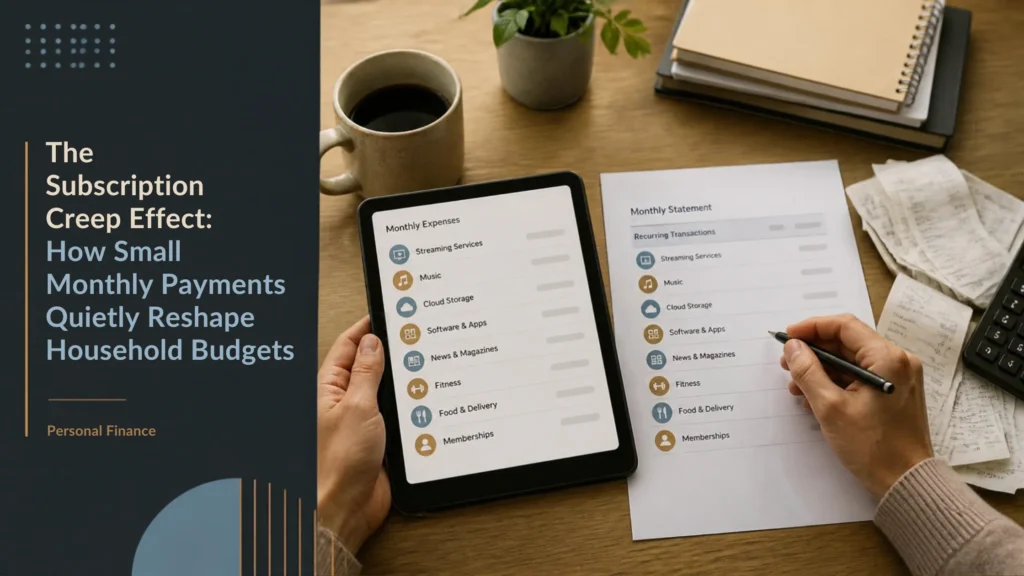
A practical solution is to maintain a complete subscription inventory that records each service, its cost, billing frequency, renewal date, and payment method.
Reviewing this information alongside bank statements can reveal unused memberships, duplicate services, or unexpectedly increased charges.
What is the psychological effect of managing multiple subscription payments?
Managing multiple subscriptions affects more than household cash flow. It can also influence how consumers perceive spending, convenience, and financial control.
One important psychological factor is the reduced visibility of repeated expenses.
Behavioral economics describes the pain of paying as the discomfort people may experience when parting with money. Automatic billing can weaken this immediate awareness because the transaction no longer requires active participation.
As a result, recurring costs may feel less significant than equally expensive purchases made individually.
Another factor is decision fatigue.
Consumers who manage many subscriptions face repeated choices about renewals, upgrades, cancellation periods, and available alternatives. When these decisions become mentally demanding, maintaining existing subscriptions may feel easier than evaluating them.
The fear of losing access can also influence behavior.
Some consumers hesitate to cancel services because they may need a particular feature, television program, or digital resource in the future. This expectation can encourage continued payments despite limited current use.
Multiple subscriptions may also create a misleading sense of affordability.
A $10 payment can feel manageable, even when similar commitments collectively account for a substantial amount of monthly income.
However, awareness can change these patterns.
When households calculate the annual cost of recurring services, they gain a clearer understanding of their financial commitments. Comparing actual usage with subscription costs also makes it easier to distinguish valuable services from unnecessary spending.
Building a Household Budget That Accounts for Subscription Creep
Subscription creep is not simply a problem of having too many memberships. It is a problem of allowing recurring expenses to grow without regularly reviewing their value.
Households can regain control by treating subscriptions as a distinct budget category rather than overlooking them among routine transactions.
A useful approach is to review all recurring charges, calculate their annual cost, and identify which services support current household needs. Canceling an unused subscription or switching to a more suitable plan may free up money without significantly affecting daily life.
The most effective budget review does not always begin with a major expense. Sometimes, it begins by examining the small payments that have quietly become permanent.
Consider setting aside time each quarter for a subscription review. A few deliberate decisions can help ensure that recurring services continue to earn their place in the household budget.
